How Long Does Knee Replacement Recovery Take? A Week by Week Guide
If you or your family member is planning knee replacement surgery, the first question that comes to mind is usually the same. How long will it take to walk again, how many days in the hospital, and when will life feel normal? Here is a clear, honest week by week guide based on what we see with our patients at Medsovis Hospital, Gurgaon.
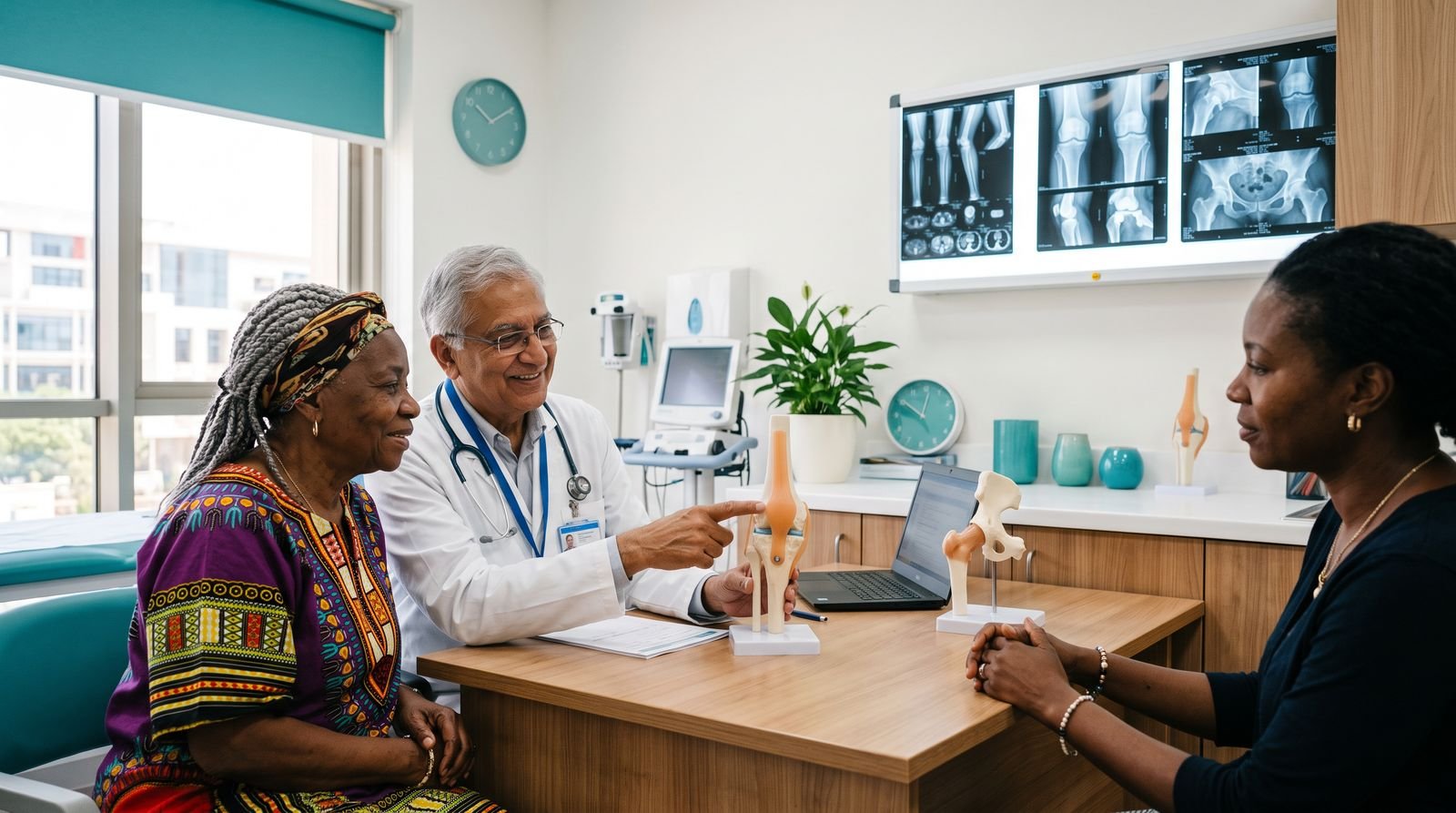
Knee replacement is one of the most successful surgeries done in India today. Almost every patient who undergoes it comes back to us saying the same thing, they wish they had done it sooner. But before saying yes to surgery, most patients want to know one thing very clearly, how much time recovery will take.
The short answer is this. Most patients start walking with support on day 1 after surgery, go home in 4 to 5 days, return to office work by week 4 to 6, and feel largely back to normal by 3 months. Complete healing continues quietly for up to a year. But every patient is different, and knowing what to expect at each stage helps you plan your recovery properly.
Understanding Knee Replacement Recovery
Knee replacement surgery, also called total knee arthroplasty, replaces the damaged surfaces of your knee joint with artificial parts made of medical grade metal and plastic. The surgery itself takes only about 60 to 90 minutes, but recovery is a much longer journey.
Recovery happens in phases. The first few days are about waking up, controlling pain and standing up. The first few weeks are about wound healing and rebuilding basic movement. The next few months are about restoring strength and getting back to your normal life. The final phase, which continues for up to a year, is about the last bit of healing you may not even notice on a day to day basis.
Modern techniques like robotic assisted knee replacement have made recovery faster than it used to be. Patients who had knee replacement 10 or 15 years ago spent 10 days in hospital. Today, most of our patients at Medsovis go home in 5 days.
The First 24 Hours After Surgery
Your knee replacement is done under spinal or general anaesthesia. When you wake up in the recovery area, you may feel a bit groggy and disoriented. This is completely normal. A small drain may be placed near your knee to remove any excess fluid, and this is usually removed within a day.
The first thing that surprises most patients is how quickly we get them moving. Within a few hours of surgery, our physiotherapy team visits you at the bedside. In many cases, patients take their first careful steps on the same day as surgery, or by the next morning at the latest. Early movement is very important. It helps prevent blood clots in the legs and starts the recovery journey right away.
Days 2 to 5: In the Hospital
This is when the real work begins. Each day in the hospital, you will walk a little further, bend your knee a little more, and reduce your dependence on the walker. Our physiotherapists work with you two or three times a day, teaching you exercises to strengthen the muscles around your new knee.
Here is what most patients experience day by day.
| Day | What You Will Be Doing |
|---|---|
| Day 2 | Walking short distances with a walker inside the room. Sitting in a chair for meals. Learning bed exercises. |
| Day 3 | Longer walks in the hospital corridor. Practising sit to stand movements. Beginning to climb one or two steps. |
| Day 4 | Walking with just a stick inside the room. Practising going up and down a full flight of stairs. |
| Day 5 | Ready for discharge with a printed home exercise plan and clear instructions for wound care. |
Some patients, especially those who came in fit and active, are ready for discharge even earlier. Others with additional conditions like diabetes or heart issues may stay one or two days longer, and that is perfectly fine. There is no prize for going home fast. What matters is going home safely.
Most of my patients are honestly surprised at how quickly they are back on their feet. The key is to trust the process and do the exercises we teach you. There are no shortcuts, but there are no delays either if you follow the plan.
Weeks 1 to 2: Home Recovery Phase
Now you are at home, or in your hotel if you are an international patient. The main goals during these two weeks are simple, keep the wound clean, manage the swelling, do your exercises regularly, and avoid putting too much strain on the joint.
Some swelling around the knee is completely normal and can last for several weeks. This is not something to worry about. Ice packs, keeping your leg elevated when resting, and taking your pain medication on schedule all help a lot. The mistake many patients make is waiting for the pain to build up before taking medicine. It is much better to take medicines regularly as prescribed, especially for the first two weeks.
Simple habits that speed up healing
- Do your physiotherapy exercises 2 to 3 times a day. Even if you feel tired, do them anyway. Muscles that are not used get weaker very quickly.
- Walk short distances several times a day rather than one long walk that leaves you exhausted.
- Elevate your leg above heart level whenever you are resting. This reduces swelling.
- Apply ice packs for 15 to 20 minutes after your exercises. Wrap the ice in a thin towel to protect the skin.
- Eat a protein rich diet with dal, paneer, eggs, chicken or fish. Your body needs protein to heal tissues.
- Sleep well. Most of your healing happens while you are asleep, so do not compromise on rest.
- Avoid smoking and alcohol during the recovery period. They slow down healing.
Weeks 3 to 6: Building Real Strength
By the end of the third week, most patients are walking indoors without any walker or crutches. Small trips to the balcony, then to the driveway, then to the market with someone along, become possible. You will notice steady improvement in how far you can walk, how easily you can climb stairs, and how much you can bend your knee.
Around week 4 to 6, most patients get cleared to return to office work, light social activities, and driving short distances. For our international patients, this is usually the time they are safely back home in their own country. Long haul flights are typically safe from day 10 to 14 after surgery, but each case is individually assessed.
If your work involves standing for long hours, or heavy manual labour, your return to work will take a little longer. We normally recommend 8 to 12 weeks in such cases. Discuss your specific job with your surgeon during your first follow up visit.
Months 2 to 3: Getting Back to Normal Life
This is the phase most patients enjoy the most. The stiffness has eased, the pain that made you decide to have the surgery is largely gone, and you can do things that had become impossible for years. Walking to the local market, playing with your grandchildren, going out for dinner with family, sitting comfortably in a movie theatre, all these small joys come back.
Physiotherapy continues during this phase but becomes less intense. Low impact exercise like walking, swimming, stationary cycling, and yoga is strongly encouraged. Try to walk 30 to 45 minutes a day if you can. Avoid running, jumping, and high impact sports as these can shorten the life of your knee implant.
Months 4 to 12: The Final Phase of Healing
By month six, most of our patients tell us that their knee feels normal, or as close to normal as they have felt in many years. Any minor stiffness or slight discomfort that remains continues to improve for up to a year after surgery.
This is when patients often tell us the same thing, they wish they had done the surgery earlier. Modern knee replacement gives most people 15 to 20 years of pain free walking, and sometimes much longer. When you compare a few months of careful recovery to two decades of comfortable, active life, the maths is easy.
Factors That Affect Your Recovery Speed
Not everyone recovers at exactly the same pace. Several factors influence how fast you get back to normal.
- Your age and general health. A fit 55 year old will usually recover faster than a 75 year old with diabetes.
- Whether you had one knee or both replaced. Bilateral (both knees) surgery takes longer to recover from.
- Your weight. Extra weight puts more strain on the new joint during recovery.
- The technique used. Robotic assisted surgery often has slightly faster recovery than traditional methods.
- How dedicated you are to physiotherapy. This is the single biggest factor in your control.
- Your general mood and attitude. Patients who stay positive and follow instructions do better.
When to Contact Your Surgeon
Most of the recovery process is uneventful. But you should get in touch with us right away if you notice:
- Increasing pain, redness, warmth or swelling around the knee
- Fever above 101 degrees Fahrenheit (38.5 degrees Celsius)
- Any discharge coming from the wound
- Sudden severe calf pain or swelling in the leg (this can be a sign of blood clot)
- Difficulty breathing or chest pain
- Falling or twisting the operated knee
For our international patients who have gone back home, we provide lifetime online follow up. You can send us photos, videos or new reports on WhatsApp anytime, and our surgeon will guide you personally. This service is completely free and continues for as long as you need it.
The Bottom Line on Recovery Time
To summarise everything, here is what to expect from a typical knee replacement recovery.
| Milestone | Typical Timeline |
|---|---|
| First steps with support | Day 1 after surgery |
| Hospital discharge | Day 4 to 5 |
| Stitches removed | Week 2 |
| Fly back home (international patients) | Day 10 to 14 |
| Return to office work | Week 4 to 6 |
| Driving comfortably | Week 6 |
| Back to normal daily life | Month 3 |
| Complete healing done | Month 12 |
| Expected life of the implant | 15 to 20 years or more |
If you have been struggling with knee pain that no longer responds to medicines, physiotherapy or lifestyle changes, please talk to us. Our senior orthopaedic team at Medsovis offers a free treatment plan based on your X rays and MRI reports. Just send them on WhatsApp to +91 9220 147 858 or fill the form on our website, and you will get an honest opinion within 24 hours.
You do not need to live with knee pain that stops you from enjoying life. Recovery from knee replacement is very manageable when you have the right team supporting you, and the results are almost always worth every day of the journey.

Our orthopaedic team has performed more than 8,000 knee and hip replacement surgeries at Medsovis International Hospital, Gurgaon, for patients from India and 40+ countries.